

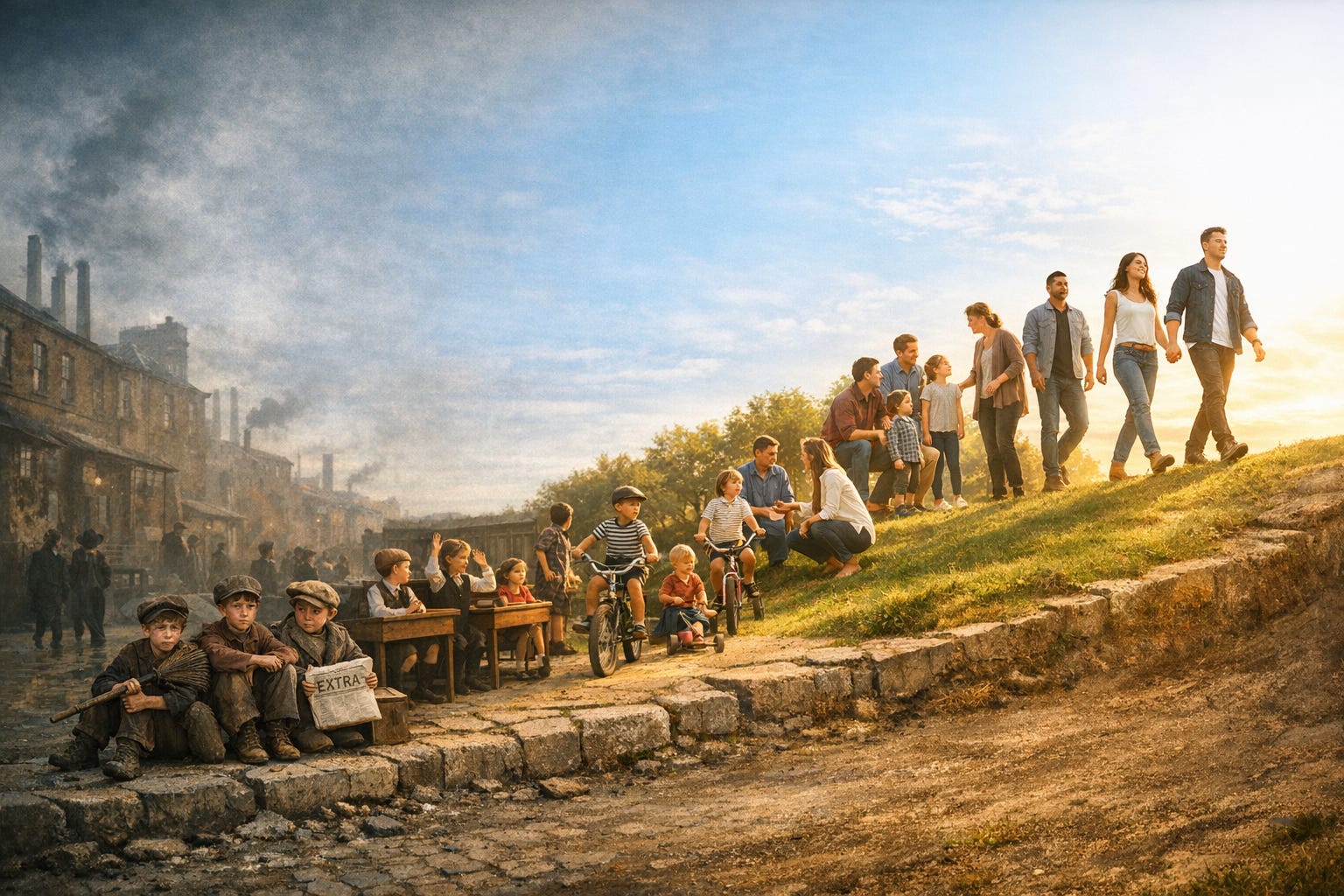
We love to brag about how we grew up.
No helmets. No supervision. No guidance.
We drank from hoses, got hit, figured it out the hard way — and somehow turned that into a flex.
But here’s the part we skip:
a lot of people didn’t make it.
And the ones who did
are still paying for it.
Survivorship bias isn’t wisdom.
It’s just the voices left standing.
We didn’t grow up better — we grew up less informed.
We ate garbage because we didn’t know better.
We drank lead and plastic because no one warned us.
We ignored injuries because pain was normalized.
We buried emotions because language didn’t exist for them.
And now we wonder why our bodies hurt, our mental health is fragile, and half of adulthood feels like unlearning.
We romanticize beatings like they were character-building.
They weren’t.
They were trauma with good PR.
We brag about smoking behind 7-Eleven like it was freedom.
It wasn’t.
It was neglect.
We laugh about being unsupervised while making decisions that shaped lives — and then mock kids whose parents show up, help them move into dorms, stand in line at orientation, help them set up gym memberships.
That’s not weakness.
That’s attachment.
We were pushed into adulthood without knowing the rules, without knowing ourselves, without guidance — and then society looked at us and said:
“What’s wrong with you? Why don’t you have your shit together?”
We weren’t taught money.
We weren’t taught relationships.
We weren’t taught consent or intimacy — just mechanics wrapped in fear and guilt.
So we learned from magazines, VHS tapes, locker-room myths, and silence.
When adults don’t teach, kids don’t stop learning.
They just learn in the dark.
We were taught bullies were normal.
So high school never ended.
The bullies just put on suits.
Got nameplates.
Learned to call cruelty “leadership.”
And now — now — young people are saying:
“No. I’m not putting up with that.”
And what do we call them?
Soft.
Not because they can’t endure —
but because they refuse to.
That’s the part that hurts.
They understood the lesson we finally taught:
abuse isn’t acceptable
bullying isn’t normal
silence isn’t strength
endurance isn’t a virtue
And when they acted on it, we mocked them.
Because if refusal is allowed, then what does all that suffering mean?
Here’s the truth we don’t want to face:
Hardship was never the goal.
Survival was never the destination.
Progress exists to remove unnecessary suffering — not preserve it like a rite of passage.
Kids today aren’t weaker.
They’re smarter.
They aren’t wasting energy learning how to suck it up.
They’re learning how to name things, question systems, set boundaries, and walk away.
They have language we didn’t.
And language is intelligence.
So who’s stronger now?
Who has more self-respect?
The ones who stayed and endured —
or the ones who were taught certain behavior was unacceptable and believed it?
If the next generation has it easier, that’s not failure.
That’s the point.
You don’t honor the past by repeating its damage.
You honor it by making it unnecessary.
So if kids today refuse what we tolerated, maybe — just maybe —
the lesson finally worked.
And if that makes some of us uncomfortable,
that’s not their weakness.
That’s our reckoning.