

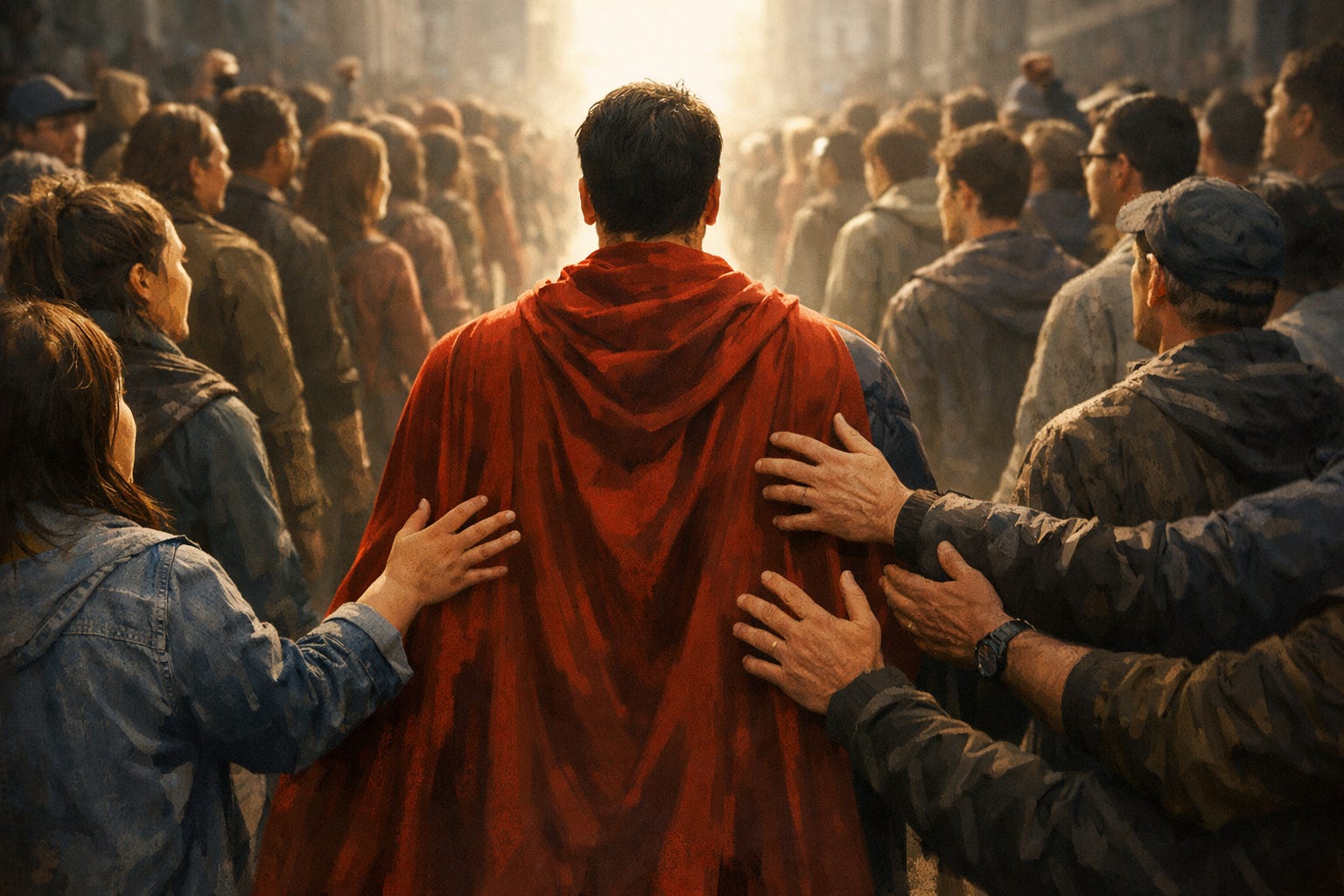
I always understood Superman.
Not as a god.
Not as a ruler.
Not even as a solution.
Superman needs nothing, so he wants for nothing.
He has ultimate power, so the only question left to him is how not to abuse it.
That’s why money means nothing to him.
That’s why he refuses the throne.
That’s why he treats power like something volatile — useful only when restrained.
And yet, Superman is always uneasy.
He respects humanity more than humanity respects itself.
He obeys laws even when those laws are twisted.
He plays by rules others discard the moment they become inconvenient.
Even while redirecting nuclear weapons into the sun, he questions whether it’s his place to intervene at all.
Not because he doubts his ability — but because he understands precedent.
The moment someone with absolute power decides they are the final authority, even for good reasons, the experiment collapses. Benevolence imposed is still domination. Order without consent is still a cage.
Superman could rule easily.
Kindly.
Efficiently.
He could end war, hunger, corruption, and crime in a week.
And that’s exactly why he never does.
Because freedom includes chaos.
Because autonomy means people will choose badly sometimes.
Because a world that only survives under a god’s supervision hasn’t actually learned anything.
That restraint costs him.
It costs lives.
It costs peace.
But he pays it anyway.
So why is Superman feared?
Not because he would rule over the meek — but because he would make the powerful irrelevant.
It’s no coincidence his great enemy is a billionaire.
Not a monster.
Not a god.
A man whose power comes from wealth, influence, and control.
Superman doesn’t hate power structures — he simply exposes how fragile they are.
And it’s no coincidence his friendship with the Bat is strained.
Batman fights crime, but remains embedded in the system that produces it.
He breaks laws, but benefits from the world those laws preserve.
He punches criminals — not hierarchies.
Superman threatens something deeper.
Not order.
Legitimacy.
And then comes the truth the stories dance around but rarely say outright:
Superman was never meant to be a real person.
He’s a symbol.
A mirror.
A reminder.
Superman doesn’t represent power concentrated in one flawless being.
He represents power shared — distributed — collective.
He is what happens when people protect without owning.
When strength is used in service, not dominance.
When law reflects shared values instead of shielding the powerful.
That’s why Superman refuses to rule.
That’s why he doubts himself.
That’s why he never finishes the job.
Because the moment Superman becomes someone, the idea dies.
And here’s the point everyone keeps missing:
We don’t need to fear Superman’s power — because Superman isn’t one person.
As a collective, we are Superman.
And power that belongs to everyone doesn’t dominate — it balances.
It doesn’t rule — it corrects.
It doesn’t enslave — it liberates.
The fear was never about Superman taking over.
The fear was about people realizing they don’t need kings, billionaires, or gods to stand up for them.
Superman was never meant to save us.
He was meant to remind us that, together,
we already can.
That’s the whole point.
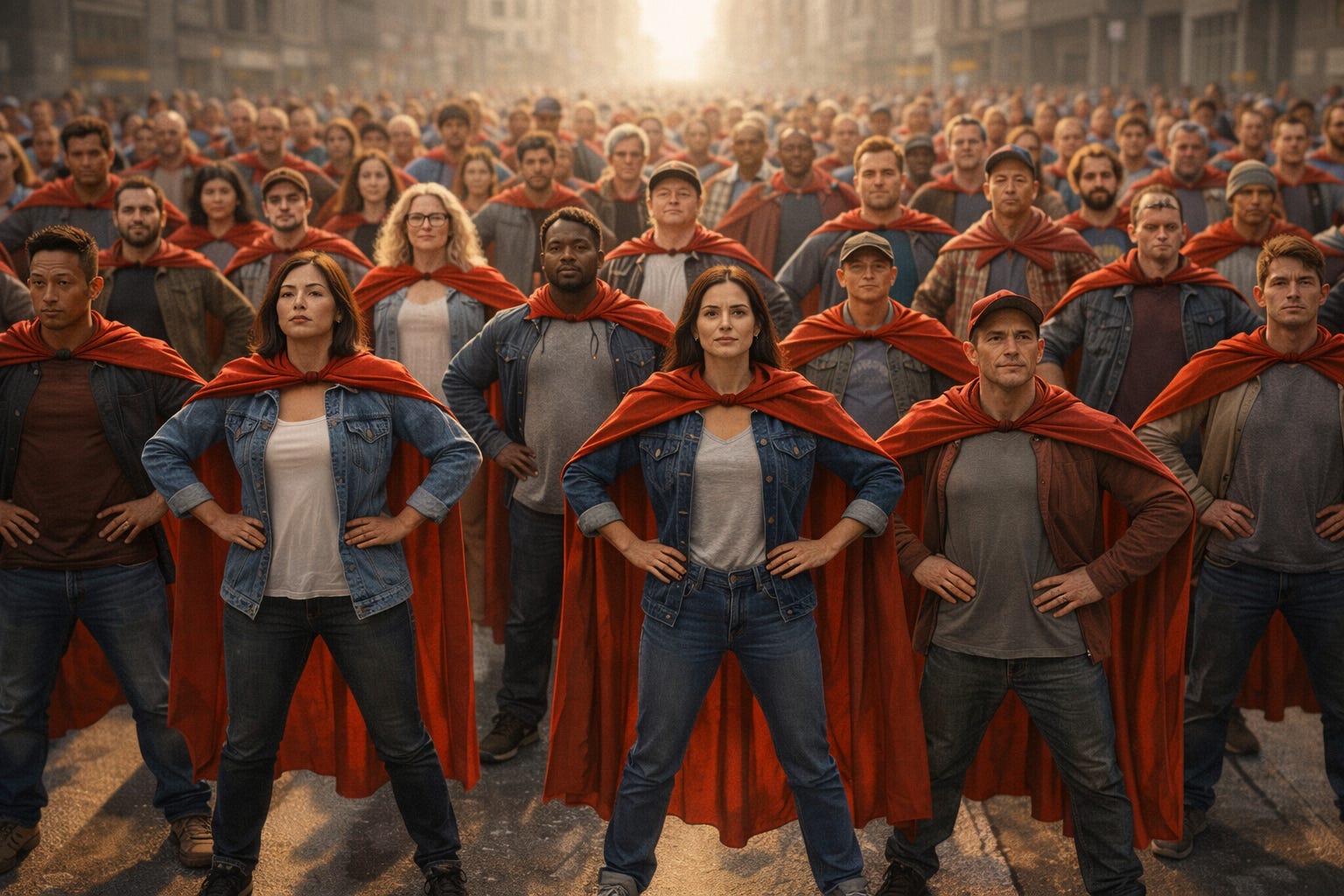
Nah, Superman can save us from sudden disasters in ways in a million mere mortals cannot.