

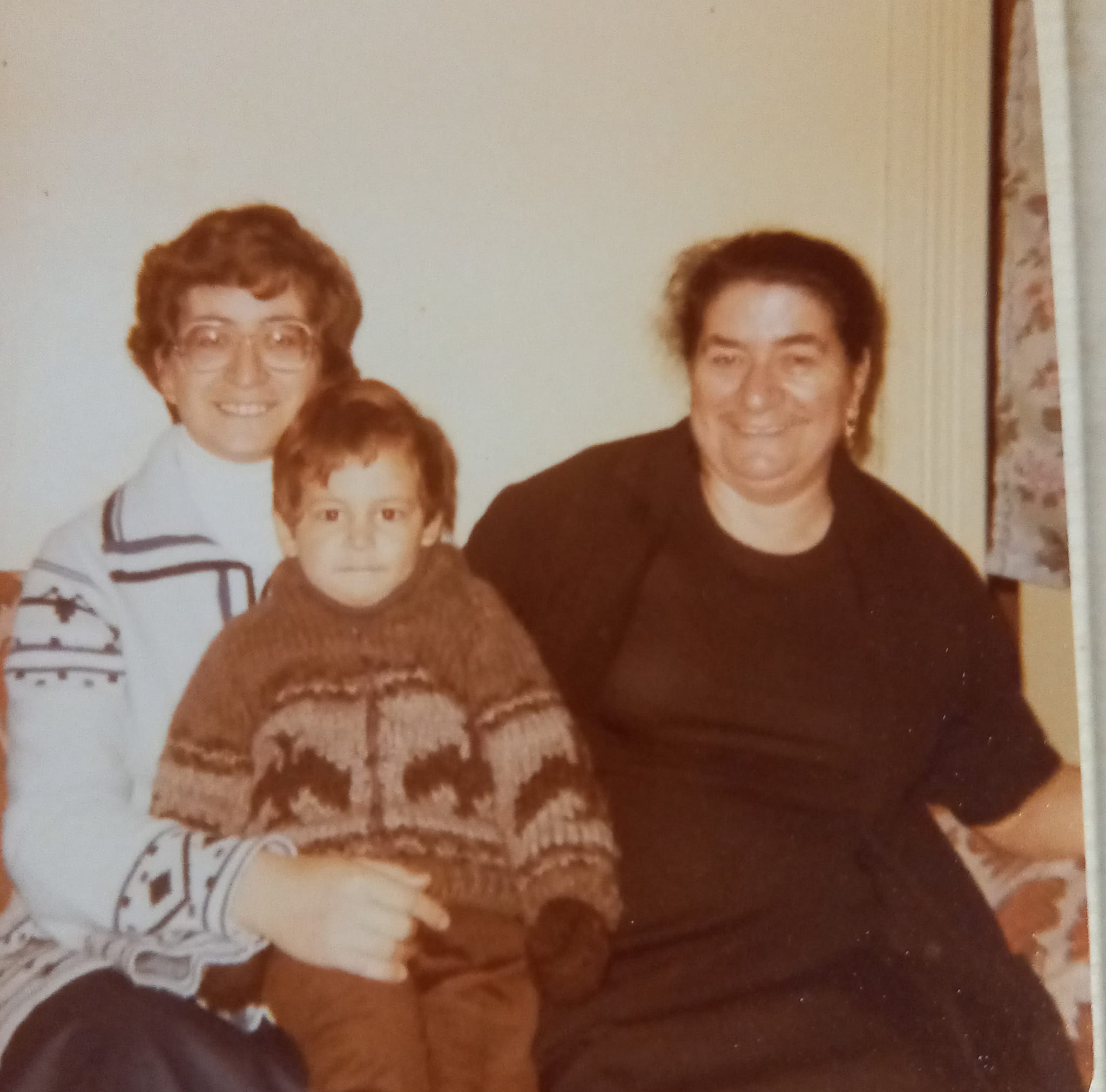
Look, I know what the world sees when they look at me.
You’re not going to catch me walking around with my baseball cap turned sideways, my pants sagging, and rap music blaring — though I do enjoy some good rap music.
But I can’t help thinking about how people would have looked at me if I’d walked around my hometown a hundred years ago.
Would I be white?
Nope.
I’d be an olive muncher, a dirty Greek, or heaven forbid, an Arab.
I just have that kind of face.
I wouldn’t have been accepted the way my whiteness allows me to be today.
Women would cross the road if they saw me coming.
They’d pull their children closer.
Shops would suddenly be mysteriously closed in the middle of the afternoon.
So what changed?
Not me.
The definition of white.
That’s what changed.
It began during the Industrial Revolution, when foreign workers started flooding into Anglo-Saxon areas — England, the Americas, and beyond. The capitalists understood that if workers ever united, no amount of money or power could protect them.
So they seeded division.
If some of the workers saw themselves in their overlords, the system could be maintained.
Power could be consolidated.
It’s a story as old as time — you want people on your side, give them a common enemy.
And oddly, much of the racism was directed toward people we’d now consider the whitest of the white — the Nordic, the Germanic, the Slavic.
The same groups that, in more recent history, became the perpetrators of some of the worst racism imaginable.
A Black man is a Black man.
A Chinese man is a Chinese man.
But what is a white man?
Really — define it.
You can’t.
In the Americas, the Revolution changed everything.
Once enslaved people began gaining freedom and social power, consolidating the idea of “whiteness” became more important than ever. The Black population vastly outnumbered everyone else. You couldn’t have the Poles, Germans, or Scandinavians picking sides — even if some of them were Catholic.
Then came the Irish.
The Jews.
The Italians.
My people — the Portuguese.
Being first-generation born in Canada, I grew up in an immigrant family.
We worked hard.
We loved hard.
We ate well — we ate and ate and ate.
My father arrived in Canada with barely the clothes on his back, and my mom’s family was no better off. But they built a life where I grew up loved and cared for. There were always lights on in the house and full bellies at the table.
And whenever a poor, hungry white man — or anyone else, for that matter — came into our home, they left with full bellies too.
So when I see immigrant families of all races and religions come through my dojo doors, I don’t see someone else.
I see myself.
I see my experience — the food, the language, the family.
I mean, who cooks sardines on a charcoal grill in the backyard?
Any of my Chinese friends reading this will probably say, “Sounds good. When do we eat?”
Yet I once spent twenty minutes explaining to a teacher that this was perfectly normal.
My grandmother took in boarders in the 1970s.
She spoke no English her entire life.
One of the boarders was a Vietnamese couple with a little baby — refugees from the war.
That baby was never allowed to cry.
If my grandmother heard it, she would march to their room, barge in, and take the baby — or send my mom if she was busy.
Eventually, the couple saved enough to move out.
Everyone cried when they left — my grandmother, the couple, everybody.
She would tell her family what that couple had gone through, what it took for them to make their way to Canada.
And they’d rebuke her: “How could you know? You didn’t even speak the same language.”
But every detail turned out to be true.
My grandmother didn’t need a common tongue to understand them.
She communicated through shared experience — through empathy.
I never really knew my grandmother.
She died when I was too young to remember.
But my mom still tells that story.
And that’s what rejecting my whiteness means to me.
It’s not guilt.
It’s not shame.
It’s clarity.
Whiteness isn’t an identity. It’s a shield.
And when you put it down, you finally see people — really see them.
Not as colours.
Not as categories.
Just as people doing their best to survive, to build, to love, to feed their children, and to matter.
That’s what my grandmother understood —
without ever needing the words to say it.
My grandmother didn’t need words to know the facts.
Don’t think so?
Fact check me.