

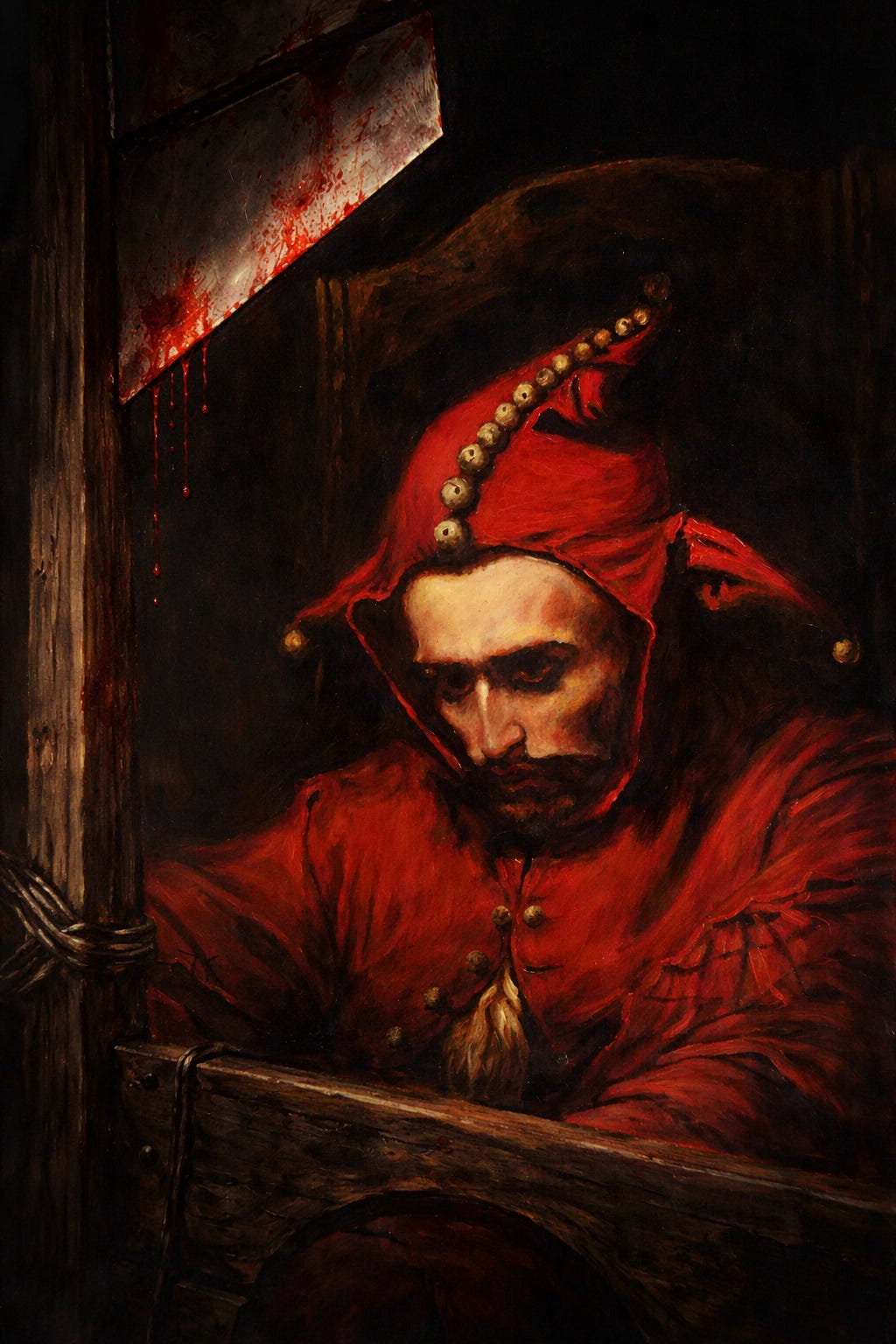
The truth doesn’t come from power.
It never has.
It comes from the fool — because the fool is the only one allowed to speak without permission.
Kings didn’t keep jesters for laughs.
They kept them because someone had to tell the truth before it was too late.
The jester mocked hunger before famine.
Mocked arrogance before rebellion.
Mocked power before the blade came out.
And every time in history, the moment power stops laughing is the moment it has decided to stop listening.
That’s the line.
You don’t kill the clown because he’s wrong.
You kill him because he’s working.
Because mockery collapses illusion.
Because laughter breaks spells.
Because once people laugh at you, they stop kneeling.
So the progression is always the same:
First, the clown is tolerated.
Then he’s warned.
Then he’s regulated.
Then he’s called dangerous.
And then he’s erased.
Not with ropes anymore.
With bans.
With labels.
With silence dressed up as virtue.
When jokes become crimes, power is already failing.
When satire is treated like violence, authority has lost its grip on reality.
When clowns are hunted, the system is protecting a lie it can’t afford to examine.
And here’s the part no one likes to say out loud:
Once the clown is gone, there are no more warnings.
No more pressure valves.
No more peaceful signals.
Only force.
Killing the clown doesn’t stop history.
It tells you exactly where you are in it.
Right before things get ugly.