

Between taking a teaching course, interviewing for teaching positions, and watching DEI get it's revenge on Washington, I've found myself thinking about the backlash against diversity we've been subjected to over the last several years.
Then I started watching The Rings of Power again, and it all came rushing back.
Remember when we were having serious adult conversations about whether Black people were allowed to exist in Middle-earth? Or when Star Wars apparently went woke because someone decided a woman was taking in the mantal of Luke Skywalker? And who could forget the national emergency that erupted when Disney cast a Black actress to play a mermaid?
Apparently, dragons, elves, talking fish, and intergalactic civilizations are perfectly believable. But throw a Black person into the mix and suddenly everyone's concerned about historical accuracy.
Let's face it. Hollywood didn't suddenly discover diversity because studio executives experienced some great moral awakening. They figured out there was money to be made producing entertainment that actually reflected the diversity of the people watching it.
It's Hollywood. Of course it was about money.
But something wonderful happened along the way.
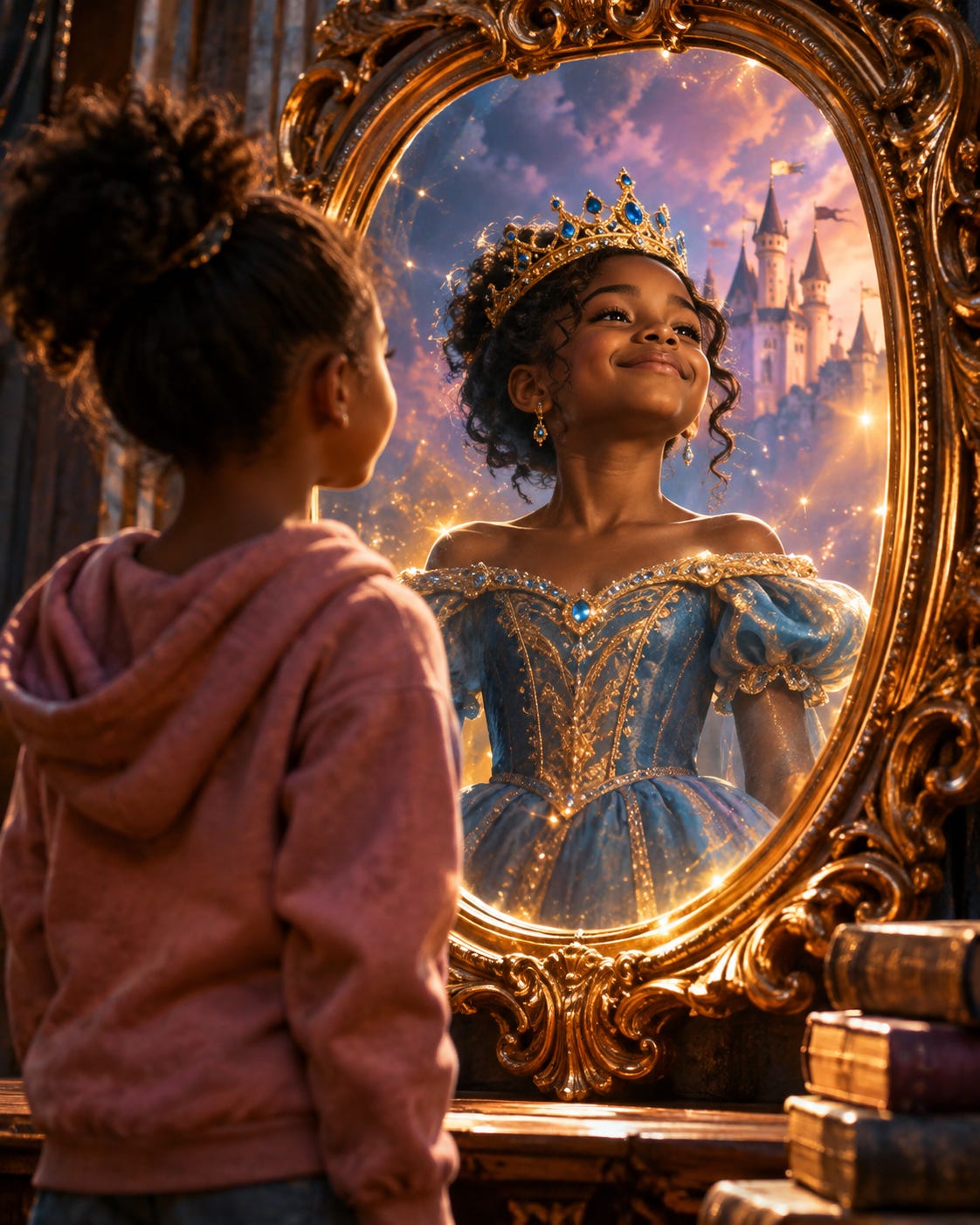
I remember watching videos of little Black girls seeing the trailer for The Little Mermaid for the first time. Watching their faces light up when they realized Ariel looked like them. The excitement, the disbelief, the sheer joy.
My heart melted. I still tear up thinking about it.
And here's the thing.
It didn't cost anyone anything.
The original Little Mermaid didn't disappear. Nobody rounded up all the redheaded Ariel dolls and threw them into a furnace. White children weren't suddenly prohibited from pretending to be mermaids.
There was simply another version of the story.
You don't see many white children getting emotional because a Disney princess looks like them. When you've spent your entire life seeing yourself represented everywhere, it probably never occurs to you that representation is something worth celebrating.
But instead of letting those little girls enjoy themselves, we had grown adults explaining what Hans Christian Andersen would have intended.
Apparently, the nineteenth-century Danish author had very specific ideas about the skin pigmentation of fictional aquatic women.
Then there were the Tolkien purists explaining that Middle-earth was inspired by Anglo-Saxon and Old English traditions, so naturally Black and Asian people had no business wandering around.
Maybe Tolkien wouldn't have imagined a diverse Middle-earth. Maybe Andersen wouldn't have imagined a Black Ariel.
Who gives a shit?
Humans have been telling the same stories for thousands of years. We borrow them, adapt them, change the characters, move them across borders, and make them our own.
Cinderella alone has hundreds, possibly thousands, of variations across different cultures. Does that mean every version except the original is wrong?
And while we're talking about cultural borrowing, can we discuss rock and roll?
How many rock classics came from white musicians adopting, adapting, or outright covering music pioneered by Black artists?
Elvis didn't invent rock and roll. Black musicians had been laying its foundations for decades. And while white performers became international superstars, plenty of the Black artists who created that music never received the recognition or compensation they deserved.
We celebrate that musical evolution. But a Black woman plays a mermaid and suddenly we're desecrating Western civilization.
Funny how that works.
Then there's my favourite argument from the anti-DEI crowd.
The best person should get the job. Period. Nobody should be hired simply to satisfy some diversity quota.
Fine.
So judge them on their abilities.
If the acting sucks, say the acting sucks. If the writing is terrible, criticize the writing. Hollywood has been producing garbage since long before anyone started complaining about woke casting.
But how exactly do you determine someone wasn't the best person for the role when you've already decided they shouldn't have been cast because of what they look like?
And here's the real problem with that argument.
Some of this stuff is great.
If a production is genuinely entertaining, well acted, and beautifully made, shouldn't that count for something? Or have we decided that merit only matters when the person demonstrating it looks the way we expected?
I keep coming back to those little girls.
Their excitement wasn't political. They weren't celebrating a corporate diversity initiative or the defeat of traditional Western storytelling.
They saw a mermaid who looked like them.
That's it.
And for some reason, that was enough to make grown adults furious.
There's something revealing about people who insist representation doesn't matter while simultaneously becoming outraged whenever their own representation changes.
If it doesn't matter, why do you care so much?
Stories aren't private clubs. They never were. They belong to the people who tell them, the people who hear them, and the generations who will inevitably tell them differently.
And if a little Black girl gets to see herself as a mermaid without taking anything away from anyone else, I struggle to understand why that's something worth fighting against.
Especially when the alternative is explaining to a six-year-old why her imaginary fish woman is the wrong colour.
Fact check me.