

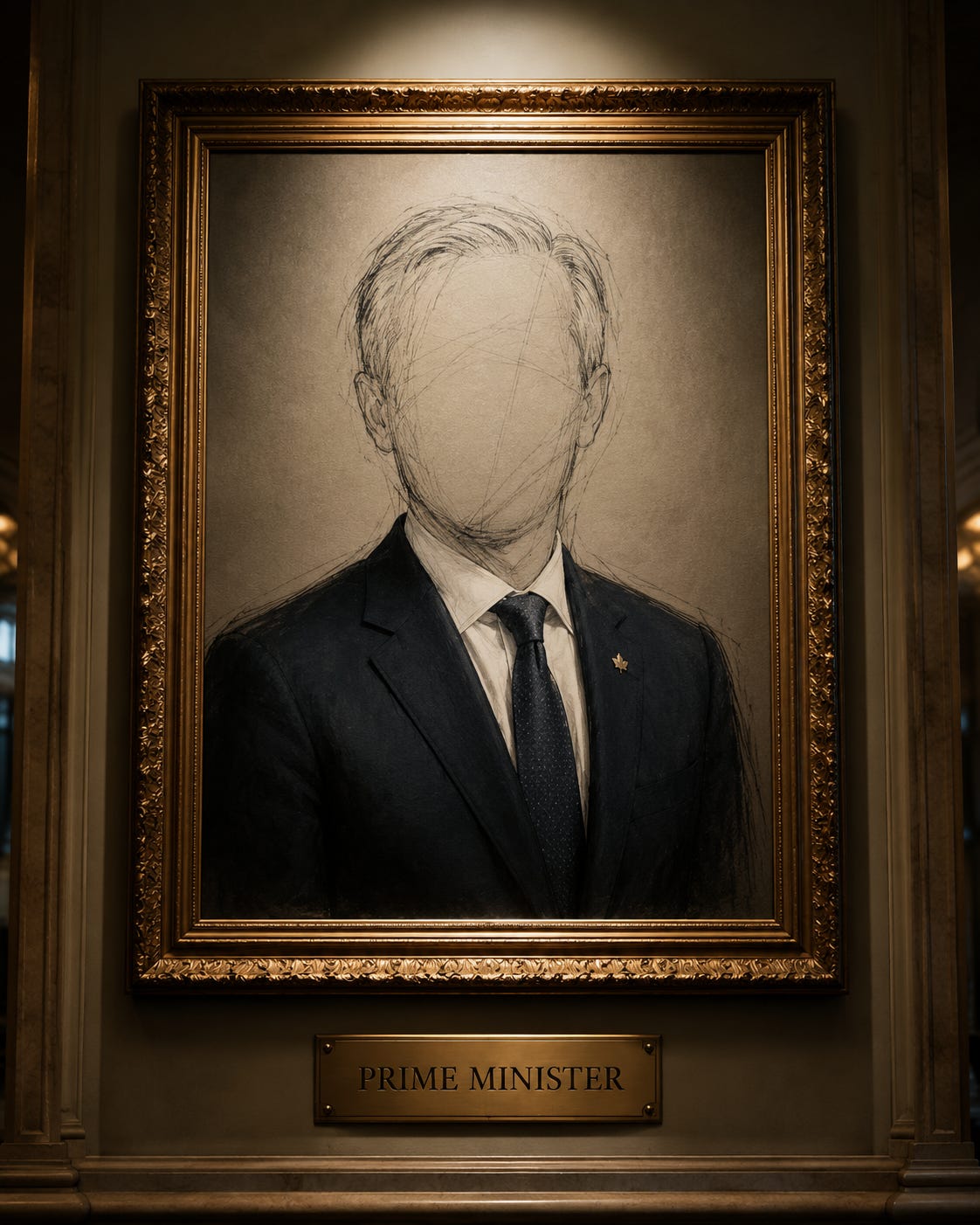
So far, Mark Carney has done a great job introducing Canada to the world.
He's signaled that Canada is not only willing, but positioned, to become a much bigger player on the world stage. He's been measured. Professional. Competent. The kind of leader who can walk into a room full of presidents, prime ministers, bankers, and CEOs and hold his own.
And that's important.
Countries need ambition. They need vision. They need leaders who can look beyond the next election cycle and imagine what their nation could become.
But after a year in power, I've started to notice something.
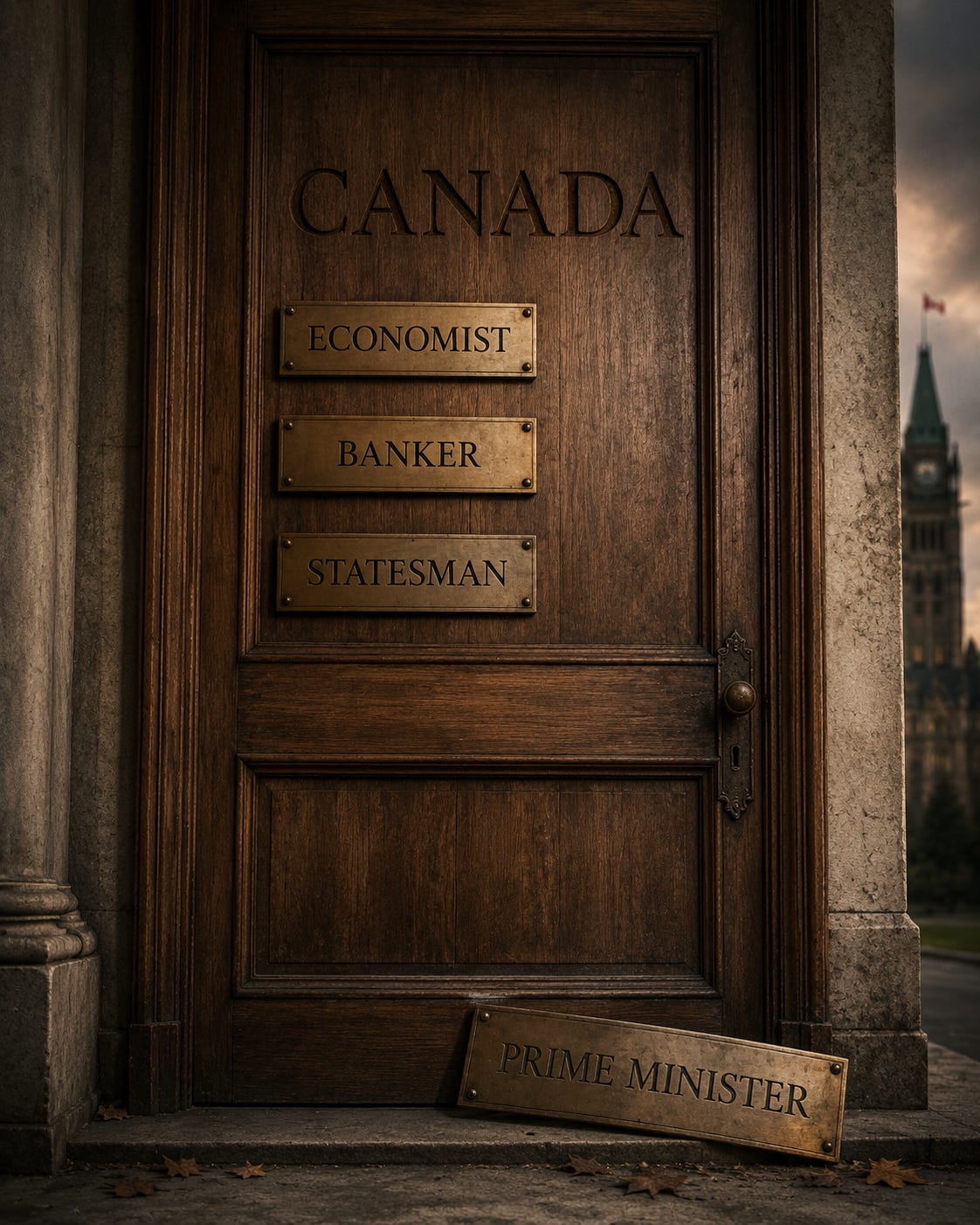
We've met Mark Carney the economist.
We've met Mark Carney the banker.
We've met Mark Carney the statesman.
But I don't think we've met Mark Carney the Prime Minister.
Not really.
And to be fair, this isn't just a Carney problem.
It's become a problem with modern politics.
Politicians spend so much time telling us what they're against that we never learn what they're willing to defend.
They become experts at managing coalitions, balancing interests, avoiding controversy, and navigating jurisdictional boundaries.
They learn how not to answer questions.
How not to start fights.
How not to offend anyone important.
And in doing so, they often forget the most important responsibility of leadership:
To tell people what you believe.
Because leadership isn't just about competence.
It's about conviction.
It's about telling people where the line is.
What matters.
What doesn't.
What you're willing to protect.
And what you're willing to lose power over.
That's the conversation I feel is missing from Canada right now.
Across much of the country, Canadians are debating the future of healthcare, education, housing, infrastructure, and public services.
Not the details.
The future.
What kind of country do we want to be?
Healthcare is the clearest example.
Yes, provinces administer healthcare.
But medicare isn't just another government program.
It's one of the defining features of Canadian identity.
And while provinces run healthcare systems, the federal government is hardly powerless.
Ottawa created the framework.
Ottawa provides funding.
Ottawa has the ability to attach conditions to that funding and enforce national standards through the Canada Health Act.
In my view, it has not only the power to push back against healthcare privatization—it has an obligation to.
Because once universal public healthcare becomes a patchwork of private services and profit-driven alternatives, it stops being a national promise and becomes just another market.
Maybe you agree with that.
Maybe you don't.
But Canadians deserve to know where their Prime Minister stands.
The same questions exist around education.
Public schools.
Colleges.
Universities.
Training programs.
These aren't simply provincial responsibilities.
They're nation-building institutions.
If Canada is going to compete globally, these systems matter every bit as much as trade agreements and foreign investment.
Yet Canadians are often left guessing where the federal government draws its lines.
And then there are the issues where Ottawa clearly does have authority.
Take Billy Bishop Airport.
The debate isn't really about the airport itself.
It's about trust.
For many Torontonians, conversations about airport expansion and privatization aren't being viewed in isolation. They're being viewed through the lens of everything else happening around them.
Healthcare becoming more private.
Public services under pressure.
Infrastructure increasingly viewed as an investment opportunity rather than a public good.
Whether those fears are justified is almost beside the point.
People want to know what principles are guiding decisions.
What remains public because it should remain public?
What belongs to Canadians regardless of what the market says it's worth?
What is the line?
Because every country eventually has to answer that question.
Not what it can sell.
What it won't.
Mark Carney is often described as the most conservative Liberal prime minister Canada has seen in a generation.
That's not necessarily a criticism.
In fact, for many voters, it was part of the appeal.
After years of political drama, competence looked refreshing.
A steady hand looked refreshing.
A leader who understood markets looked refreshing.
Nobody is going to mistake Mark Carney for a socialist.
Nobody is going to mistake him for a bleeding-heart liberal.
That's not who he is.
But if he's going to govern from the centre-left—as Liberal governments traditionally have—then eventually he's going to have to start taking positions that convince Canadians he's willing to defend public institutions when doing so carries a cost.
Not when it's easy.
Not when the polls support it.
When it's difficult.
When powerful interests disagree.
When there is political risk involved.
Because Canadians aren't just looking for competence anymore.
They're looking for conviction.
They want to know what you believe.
They want to know what you're willing to fight for.
And more importantly, what you're willing to fight against.
So far, Mark Carney has done an excellent job introducing Canada to the world.
Now he needs to introduce himself to Canada.
Because a nation isn't built by GDP reports, trade deals, or international headlines.
It's built in hospitals.
In classrooms.
In transit systems.
In public spaces.
In the institutions we share.
And sooner or later, every leader reaches the same moment.
The moment when competence is no longer enough.
The moment when people stop asking whether you can govern—
and start asking what you're actually governing for.