

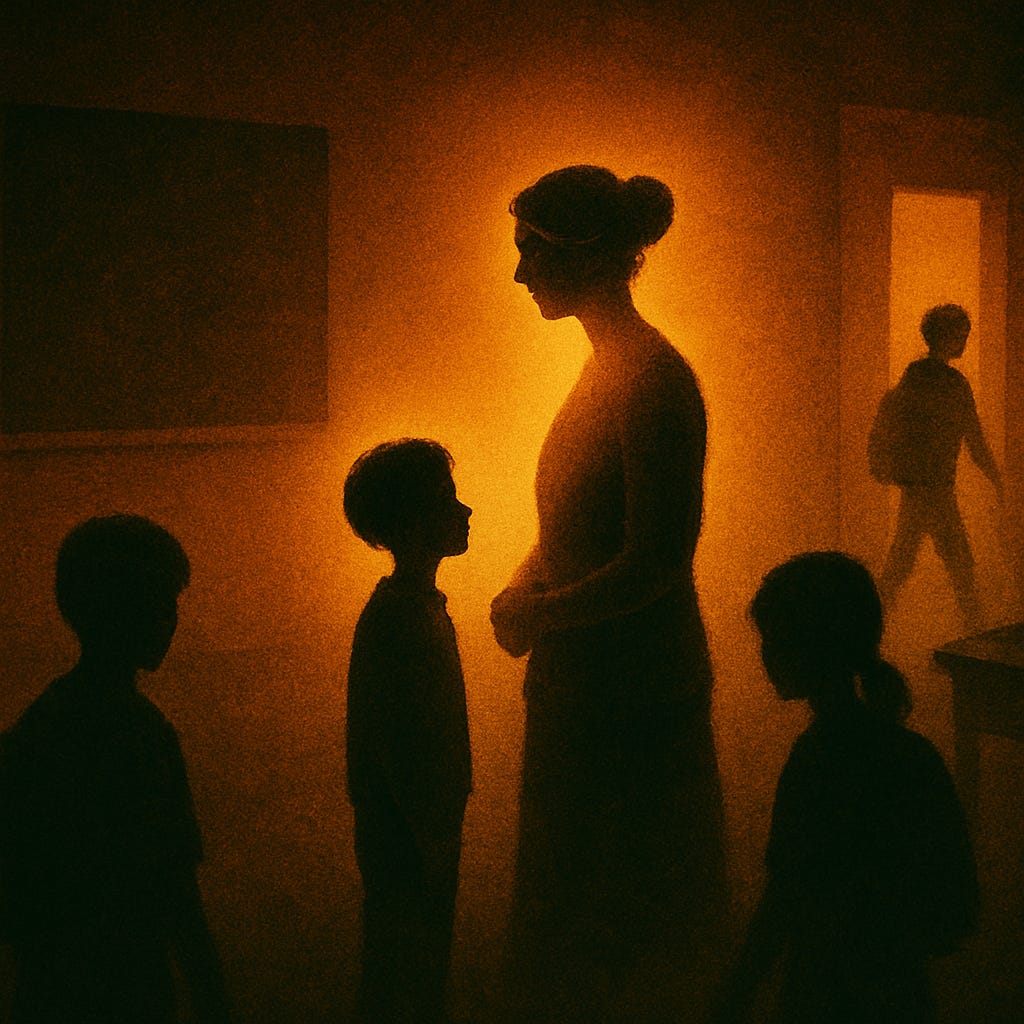
Some kids don’t just like the best teachers — they orbit them.
You’ve seen it.
That one kid whose desk is always pulled just a little closer.
Not because they’re being separated or punished,
but because something about that teacher feels like sunlight.
Warm. Safe.
A place where they’re not too much, not too loud, not too broken.
Just… enough.
The other kids don’t get it.
They enjoy a good teacher — sure — but when the bell rings, they’re gone.
First ones out the door, already halfway down the hall.
But that kid?
He moves slow.
Takes forever to slip his shoes on before recess.
Not because he’s lazy — a chimp could learn to tie laces.
He just wants to linger in the gravity of the one adult
who makes him feel valued, important, seen.
The world tells this kid he’s never enough.
The teacher — the right teacher — makes him feel
like he’s more than he ever needed to be.
He might lash out at the other kids,
the classroom,
the system,
even at his favourite person in the world.
But that teacher —
that teacher sees the “why” behind the fire.
She knows the psychology,
not because she skimmed a chapter once,
but because she paid attention.
Because she actually cares.
And then you’ve got the other teachers —
the ones who skipped the lectures
but still turned in the assignments.
The ones who dock marks because a genius kid
didn’t hand in a rough draft,
as if anyone gives a damn about a child’s notes
or the tortured process behind a Grade 6 book report.
If a kid copied his whole project from an encyclopedia —
like I did —
who cares?
Did he walk away knowing a few more things
about polar bears, or planets, or Napoleon?
That’s the question.
But I’m getting off topic.
We praise teachers like this.
We look at them with soft eyes and say,
“I don’t know how you do it.”
But here’s the thing —
empathy isn’t magic.
It’s not a personality trait you’re born with.
It’s a skill.
Just like controlling your emotions is a skill.
Just like reasoning, listening,
and actually understanding another human being
is a skill.
We expect those skills from kids.
We demand them from students.
We write reports about how they “need to work on self-regulation,”
as if managing your inner world at nine years old
is as easy as a worksheet on long division.
But what about teachers?
Learning is a lifelong job,
and the best teachers know that.
The great ones are constantly evolving,
upgrading their empathy,
sharpening their self-control,
studying human nature like it’s the curriculum
they were supposed to be given.
And here’s the tragedy:
these great teachers will never rise
to the great leaders they could become.
Not because they lack ambition or talent —
they have more of both
than half the people sitting in the boardrooms.
No —
they stay in that classroom
because they know what will happen if they leave.
If they take the promotion,
if they accept the leadership role,
if they step into the spotlight…
it means leaving that kid behind.
It means handing him off to Sarah down the hall —
the one who’s always yelling,
always punishing,
always mistaking fear for respect.
So the great teacher shakes her head and says,
“I’ll do it next year.”
But next year,
there’s another kid
with a desk that needs to be pulled a little closer.
And so we all suffer.
Fact check me.