

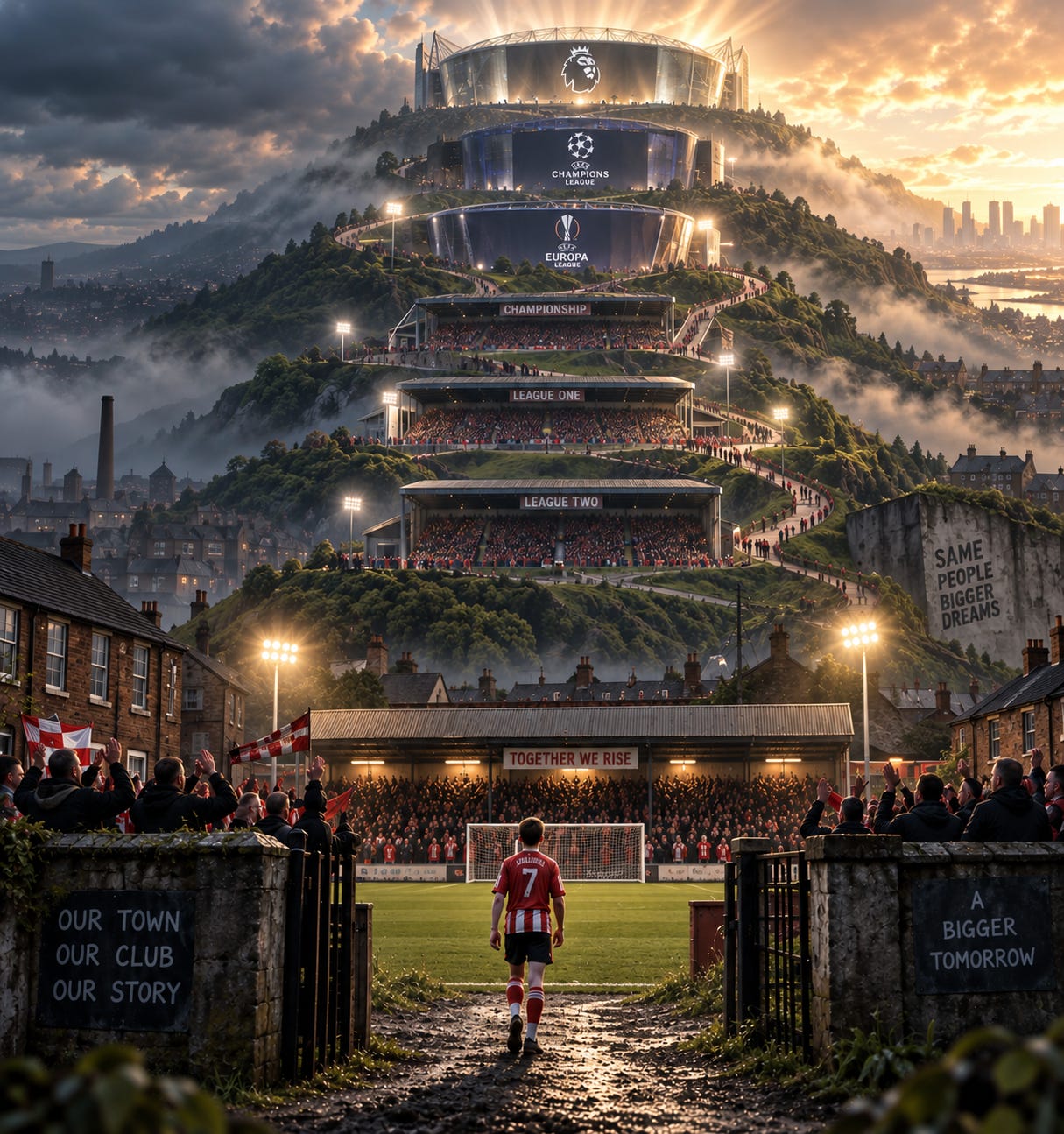
I think what I love most about football is the way it's organized in most of Europe and other places around the world.
I grew up in Canada, where every sport—hockey, baseball, basketball—seemed to have endless games all season that didn't mean much. One game blurred into the next. The season itself never seemed to be the point. The goal was to make the playoffs, which turned out to be another tournament filled with—you guessed it—more endless games.
I mean, best of seven? Who are we kidding?
Why am I sweating through my underwear with the air conditioner blasting in May watching ice hockey on TV?
Football is different.
Outside closed leagues like MLS, the season is it. In the major European leagues, you know the schedule, you know when it's going to end, and everybody plays everybody home and away. There is no playoff waiting at the end to decide whether the previous nine months really mattered.
Every match matters.
And there's something to play for almost everywhere in the table.
The top clubs fight for the title. Below them, clubs fight for places in competitions like the Champions League and Europa League, bringing prestige, money and the possibility of attracting better players.
At the bottom, they fight simply to stay.
Relegation may be one of the greatest ideas in sports. Finish at the bottom and you don't get rewarded with a better draft pick. You get sent down. Somebody from the league below gets your place.
Your place has to be defended.
But that's what makes the other side of the equation so beautiful. You don't need to start with a multibillion-dollar stadium, league approval and owners wealthy enough to buy their way into the club.
You can rise.
Money still rules football at the top. Let's not romanticize it. The richest clubs have enormous advantages and the gap gets harder to cross every year.
But the door isn't completely closed.
Leicester City proved that in 2015–16. They had only returned to the Premier League two seasons earlier and narrowly avoided relegation in their first year back. The following season, a team that bookmakers had offered at 5,000-to-1 to win the league somehow became champions of England.
A perfect storm carried their players, their city and their supporters all the way to glory.
It didn't last.
Who cares?
What a fucking ride that must have been.
And you don't need to win the Premier League for football to mean something.
In North America, minor-league baseball and junior hockey have passionate supporters, but those teams aren't going anywhere. Win every game you want; the system has already decided where you belong. There is no path from the minors to Major League Baseball or from junior hockey to the NHL for the club itself.
Football allows people to dream of greater glories.
Third-tier clubs can fill stadiums because third tier isn't necessarily where their story ends. Get promoted. Stay up. Build. Go again. Maybe someday reach the top flight. Maybe draw one of the giants in a cup and beat them on a rainy Tuesday night.
Maybe none of it happens.
But you're allowed to dream.
And at those smaller clubs, there are still lads on the pitch who aren't so different from the people in the stands. Football has stories of players who worked ordinary jobs before climbing through the lower leagues and eventually playing in front of tens of thousands.
That matters because a local football club isn't just some frivolous piece of professional entertainment.
For towns and working-class communities that have spent generations being ignored, the club carries their name into places they may otherwise never be seen.
Sometimes glory isn't lifting the Premier League trophy.
Sometimes it's getting promoted.
Sometimes it's surviving relegation.
Sometimes it's watching some ordinary lad score a goal that means your little town gets another year on a stage nobody expected it to reach.
The football pyramid doesn't eliminate inequality. Far from it.
It just refuses to make inequality absolute.
Football doesn't promise the underdog will win.
It promises the underdog is allowed to try.